Tips for safe diving? Here is how we approach diving to make it safe and repeatable.
Diving is an adventure sport that we all love. It’s our passion and our life. As a tech or public safety diver you need to strike a balance between exploration vs the risk.
So, in no particular order here are our six tips for Safe Technical Diving that we apply to every dive aat Frontier Tech Divers
Plan the dive as a team
Plan conservatively
It’s all about the gas
Build depth and experience slowly
Don’t be a Lazy diver
Be Insured*
Tip 1. Plan the dive as a team
Computers are great tools for divers , but you still need to plan the dive. Here we do it as a team.
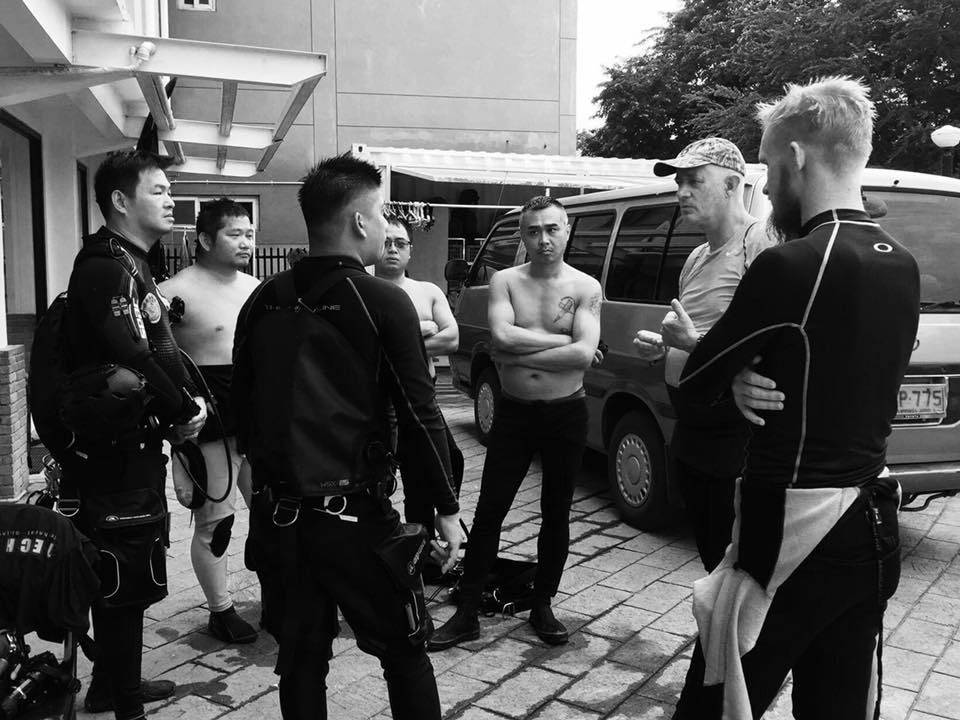
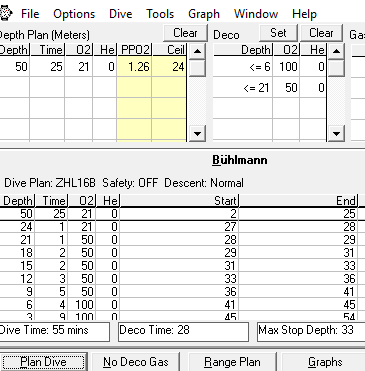
We sit down and plan the dive around the least experienced diver. We use decoplanner, but you can use any familiar software. We also plan for contingencies such as lost gas and longer bottom times.
Don’t forget the dive site and then plan the day for what’s happening today. This is especially important for ERDI public safety divers. Current, waves and temp will all have an affect on our dive and may make the site un-diveable. Planning together everyone is on the same page and communication is easier underwater. If in doubt don’t dive.
Tip 2. Plan conservatively
Be conservative with Procedures, Oxygen, Nitrogen, Narcosis and Stress
Procedures – divers tox on stops for two main reasons. They didn’t analyze and label correctly. They didn’t do a safe gas switch. Use MODS everytime
Oxygen – Dive to max PO2 of 1.4 on backgas, 1.6 on deco. Keep your CNS within 70% for the day and watch your depths at the gas switch levels
Gradient Factors. Dive a conservative factor. In the Philippines the water is warm and plenty to see on Bohol’s walls, so we dive Gradient Factors of 45/70.
Narcosis – Everyone thinks slower at depth. Know your limit and if in doubt use TRIMIX.
Stress – Zero vis in a river and you are looking for remains. Your mind can play tricks on you before you even enter the water. Let your team mates know that you’re stressed before you get wet. TENDERS : know your divers. Talk to them if you suspect they are physically or psychologically stressed. Call the dive using rope signals or comms.
Tip 3. It's all about the GAS
Know your SAC rate. Mine is 15L/min. but that can more than double on a strong tough dive. For public safety divers plan around your stress levels. A SAC rate x 1.5 would be a good start
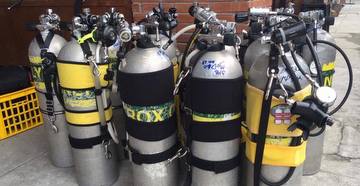
Plan your dive on the computer with the highest team mates SAC rate. Then maybe bump it higher if conditions are tough CARRY YOUR OWN GAS. We use minimum rule of thirds for back gas and double for deco gas . Make sure you are carrying enough gas for contingencies as well.
Public safety divers and tenders- carry an appropriate amount of redundant gas. Practise FFM to regulator gas switches. If using a gas switching block, practice switching and also confirm which has is selected with your tender prior to starting the dive.
No one died by carrying too much gas!
Tip 4. Build depth slowly
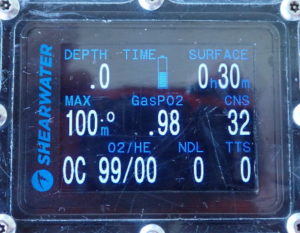
100m is just a number - BUILD your depth slowly
At Frontier Tech Divers we will only dive within a diver’s certification level. Our first dives together and we will start shallow – 40m even if you are an advanced trimix diver. We then build dives in slow increments.
If diving air then we do not exceed 50m, unless a diver is diving on a weekly basis, in which case our maximum depth for air diving is 55m.
For trimix dives we set an END of 30 to 40m. The max END for the helitrox course, Trimix and Advanced trimix diver and instructor level courses is 30m.
Trimix dives are built in increments of 10m. If day one is 60m we do not jump to 90m on day two. And remember 100m is just a number!
Tip 5. Don't be a lazy diver
DIVE HARD. DIVE OFTEN. STAY LUCKY
Dive Hard – don’t be lazy. Practice your skills on every dive. I do shutdowns, gas shares, blind line work on every dive. For public safety teams practice bail-outs, entanglements, blind work and dive in realistic environments.
Dive Often – dive as much as you can. If you have not been diving for a while then build your depths slowly. Here in Bohol you’ll have plenty of chance to do lots of dives or the next level of TDI tech diver training or ERDI public safety diver training.
Stay Lucky – Diving is practice not luck. No one is so experienced as not to benefit from further practice and training. In the words of Arnold Palmer
The more I practice the luckier I get!
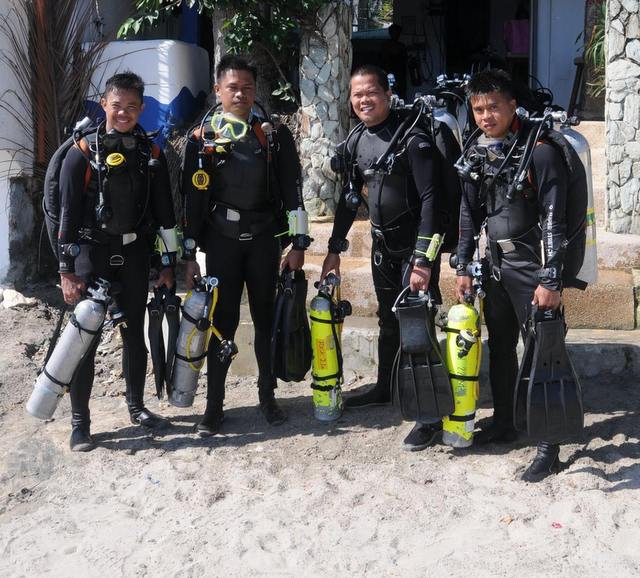
Philippine Air Force Rescue Divers. Diving with us and continually practicing their skills
Tip 6. Be insured
Tip 6 ? Yes, diving is a safe sport but there is risk in all sports. Get insured
At Frontier Tech Divers we require that you are insured to the depth of your training. Please bring a copy of your DAN or DiveAssure insurance
We use Dive Assure. Click on the logo on the left to go to their site